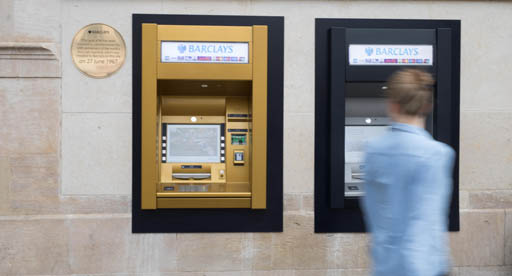

People's relationships with their bank is changing, for ever. This is not an exaggeration - banks are now compelled to share account holders’ spending and payments history with lenders, credit reference agencies and other third parties, if the account holder gives permission. Here’s what it will mean.
When the internet became a daily part of many people’s lives during the mid-1990s it was said the new technology had already changed everything.
“The Internet has revolutionised the computer and communications world like nothing before,” a paper published by a leading computer scientists in 1997, said.
But these scientists probably had no idea what would happen next, and that the technology they helped pioneer would soon change our daily lives from how we buy food to how get a mortgage.
Comparisons can be made with the development of powered flight. What was once a jolly jape for wealthy buccaneers during the late 19th century morphed into the international airline business, and helped create the global economy.
Unintended revolution
The same unintended revolution is taking place now in banking prompted by the changes that have taken place in computer science and the internet.
What was meant to be a way to help people manage their bank accounts online and work out how much money they’re spending on cappuccinos is turning into a personal finance revolution.
Open Banking, which despite Brexit will be introduced in January 2018 following an EU-wide initiative, will force banks to enable its customers to share their banking data with third parties.
“Open Banking will make a transformational change to banking for personal customers and small businesses,” says Alasdair Smith, who led the investigation into more open banking for the government’s competition watchdog the CMA.
“For the first time innovative and secure apps will provide personalised services and info
rmation to cover all financial needs in one place, and make it easy for people to find out what bank account is best for them.”
In a nutshell, Open Banking will enable other banks, shops, lenders, credit reference agencies and even possibly rental referencing agencies to understand a person’s spending and credit history by ‘seeing’ their banking activity in real time.
Profound change
“This data sharing ecosystem is expected to create a new era of increased competition, encourage better products and improve customer service,” says a White Paper published by credit reference agency Experian earlier this year.
“What we’re witnessing is a profound change in the relationship between banks and their customers.”
To some people this all sounds both a bit Big Brother - given it’s not been made clear what level of detail is going to be shared - as well as being risky, given the regular examples of high-profile organisations being hacked and people’s private data being released into the public domain.
These worries were highlighted by Accenture recently when it revealed that two thirds of the 2,000 people it interviewed said they wouldn’t share their financial details after Open Banking kicks in.
Baby boomers
But resistance to the idea is dependent on age, the research shows. Nearly forty percent ‘Generation Z’ respondents – those born after 1996 – said they were likely to use open banking instead of their usual method of payment in the future, compared with 13 percent of those born between 1946 and 1964 - also known as Baby Boomers.
“Open banking has the potential to transform consumers’ relationship with financial products, but it hinges on consumers’ willingness to embrace it,” said Jeremy Light, Managing Director Accenture Payment Services, Europe, Africa and Latin America
But what hasn’t been highlighted are the benefits that this could bring. As well as enabling people to see all their banking activity, credit card payments, bills and other financial transactions in one place (and make applying for credit easier) it could also help people save money.
“Retailers will also need to communicate clearly with their customers to demonstrate the potential benefits of giving consent to sharing their bank information, whether to receive discounts or gain access to credit,” says Jeremy.
Best deals
Another opportunity for many people will be that credit scores, once Open Banking goes live in January, will reflect their recent spending and borrowing rather than their ‘historic’ activity.
This – according to Experian – will lead to more accurate credit scoring and therefore loans, credit cards and phone contracts that are more tailored to a person’s real-time circumstances.
An example would be that a homeowner could give their favourite energy comparison site permission to use the data provided by the bank about their most recent payments to take advantage of the best deals.
“The provision of credit has to-date been based on historical data provided by customers or sourced from third parties such as Credit Referencing Agencies (CRAs),” says Experian.
“Open Banking provides the opportunity to access more detailed information – with the customer’s consent – on current, as well as historical income and expenditure. This can be combined with credit information to provide a more complete picture of a customer’s financial status.”
Credit score
This will enhance services like CreditLadder that are helping tenants improve their credit score with rent reporting. Before tenants were unable to let mortgage lenders know that they were reliable, regular rent payers and therefore worthy of a mortgage.
But now, by paying their rent through us to their landlord, their credit score can reflect their real circumstances and paint a much more personal, accurate picture of their credit history.
“Tenants are increasingly seeking better value in the rental market as they realise they may have to rent for much longer than they were expecting," says Sheraz Dar, CEO of CreditLadder.co.uk.
It’s all part of a sea change in the way people can influence the way the huge credit referencing and lending industries view them - in a way those early magnificent men in their flying machines could not have imagined.
Remember, CreditLadder can help you improve your credit score.
CreditLadder can improve your credit position by reporting your rent payments. CreditLadder is the first way to improve your credit score and position across all three of the main Credit Reference Agencies in the UK, namely Experian, Equifax and TransUnion. Building up a high credit score has a lot of benefits, including helping you access finance at better rates - this can also help save you money. CreditLadder also runs a free mortgage application service in partnership with Tembo which will tell you how much you could borrow.
Remember the content provided in this article is for information purposes only and should not be considered as advice.